

And what they need from super funds

Amid ongoing concerns about Australians’ financial health, CSBA’s FEAL Superannuation Customer Experience Study highlights the views Australians hold about retirement. By examining sentiment and intentions, super funds can tailor strategies to improve members’ retirement preparedness and financial wellbeing. However, adopting a one-size-fits-all approach isn’t enough – funds must take account of the unique perspectives held across generations to effectively boost engagement.
Customer experience experts, CSBA, surveyed over 6,300 members from more than 100 superannuation funds in August 2024, exploring member attitudes towards retirement and superannuation.
We are delighted to share this report with you.

• Rising inflation and high interest rates are intensifying concerns about financial security in retirement.
• Four in ten members lack confidence that they will have enough money for a comfortable retirement.
• Three in ten members feel their super fund is not doing enough to help them plan for retirement.
• There are key generational differences in perspectives on retirement.

Ongoing economic pressures have heightened feelings of uncertainty about the future, making retirement planning increasingly daunting for many Australians.
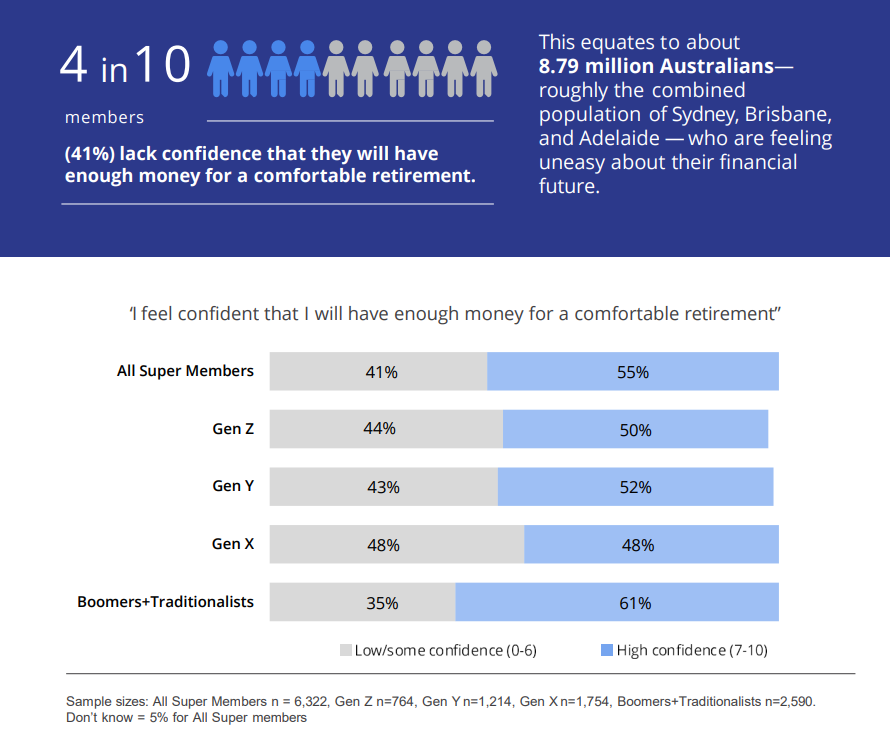

Retirement confidence is generally quite low among Australians, with noticeable differences across generations. Older Australians – Boomers + Traditionalists – feel most secure about their retirement savings, while those just behind them – Gen X – are least confident.
Retirement is close for Gen X, with many facing a tough mix of financial pressures and economic uncertainty. Soaring living costs, inflated mortgage repayments, and the added responsibility of supporting children or ageing parents, makes it difficult to boost retirement savings. With limited time left to accumulate wealth, Gen X is particularly vulnerable to retirement insecurity, a concern they are acutely aware of. In fact, CSBA research shows that 7 in 10 Gen Xers believe they could have made better financial decisions to prepare for retirement, if given the chance to do it all over again.
• Offer clear, practical advice on boosting retirement savings, including strategies for increasing contributions or diversifying investment portfolios, in a way that feels manageable and empowering.
• Share relatable success stories or testimonials from other members who have successfully planned for retirement despite experiencing financial challenges. Authentic stories can inspire confidence and motivate members to act.

Under the Retirement Income Covenant, super funds are expected to provide members with better support in preparing for retirement. However, three in ten members feel their super fund is not meeting this expectation.
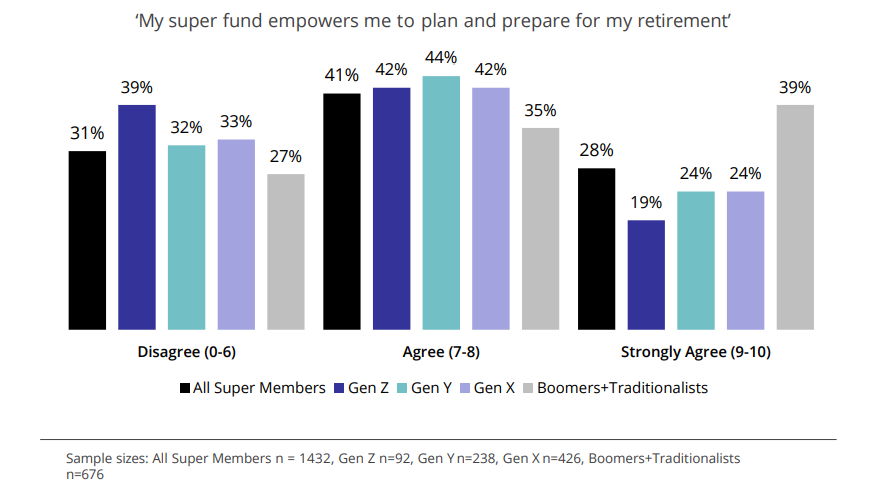

While most Australians have a basic understanding of superannuation, many lack the specific knowledge needed for effective retirement planning. Gen Z is the least empowered when it comes to retirement. This is largely due to their low engagement with long-term financial planning, including super.
| 85% of Gen Z, retirement feels very distant | Less than half Gen Z’s 45% have a clear vision of what life in retirement might look like. |
Gen Z’s views are understandable considering the immediate financial pressures many of them face like student debt, rising rents, or saving for a home.
Super funds play a crucial role in boosting Gen Z’s understanding and engagement with super and retirement planning.
Gen Z is least likely to feel that their super fund actively supports their understanding of superannuation. This gap presents opportunities for super funds to adapt their engagement strategies to better meet Gen Z’s needs and preferences. To capture their attention, super funds must offer better, more personalized digital experiences. Gen Z expects intuitive, appbased platforms from the brands they interact with—something many super funds have yet to fully embrace. Using gamification, interactive tools, and clear messaging about the benefits of superannuation can greatly boost engagement, support learning and encourage healthy saving habits. Funds can also harness AI to process member data and uncover preferences to enable more personalised communications.

One financial services brand which has successfully leveraged technology to meet younger customers’ needs is Up Bank, which recently surpassed 1 million customers. Up integrates gamification into personal finance with interactive savings tools, custom “saver” accounts, and features like “Round Ups” that automatically save spare change.


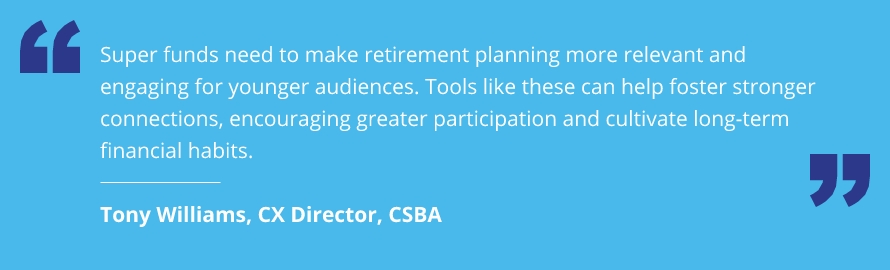


Super funds must respond to the diverse emotions and concerns of each generation, tailoring their strategies to address the unique financial challenges and the retirement priorities of their members.
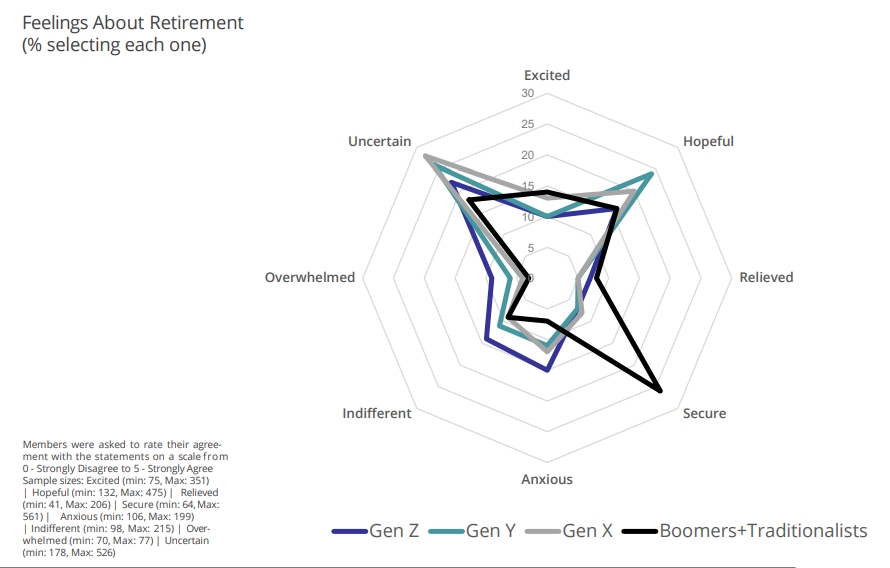

Australians’ attitudes toward retirement reveal deep concerns about financial security, preparedness and the inevitable lifestyle changes that accompany it. Older generations like Gen X and Boomers + Traditionalists are the most “excited” about retirement, driven by a stronger sense of anticipation due to its proximity. Boomers + Traditionalists are far more likely to feel “secure,” likely due to their accumulated wealth, savings and lower debt levels. However, even within these groups, feelings of “uncertainty” are common, highlighting the need for a communication approach that goes beyond a one-size-fits-all strategy, even within a single generation.
Younger generations, including Gen Z and Gen Y, experience greater uncertainty, indifference and anxiety about retirement. For them, brands should be seen not only as providers of financial products but as trusted partners in navigating an uncertain future. Younger people commonly choose brands that align with their values. By addressing their interests and concerns, super funds can build trust and make their messaging more relevant and impactful.
Despite these concerns about retirement, many Australians also feel a strong sense of hope. For people in every generation, retirement represents freedom and flexibility and a time to pursue personal interests and focus more on family and friendships, rather than career.
This report is based on data collected in the August 2024 wave of the CSBA FEAL Superannuation Experience & Engagement Benchmark Program.
All surveys were completed online via computer aided web interview using sample provided by participating funds and independently sourced via an accredited panel.
Generations are defined by age as follows:
Gen Z (18-29), Gen Y / Millennials (30-44), Gen X (45-59), Boomers + Traditionalists (60+).
Launched in 2009 as a collaboration between CSBA, FEAL, and Melbourne Business School, the CSBA FEAL Superannuation Experience & Engagement Benchmark Program is designed to equip fund executives with valuable comparative insights on member perceptions, attitudes, and experiences.