

The Underrated KPI that Deserves Centre Stage
For Business Improvement

For years, Customer Satisfaction (CSAT), Ease and Net Promoter Score (NPS) have dominated the spotlight as the go-to metrics for gauging customer experience success. But in today’s fast-evolving service landscape, there’s one metric quietly stepping back into the limelight – First Contact Resolution (FCR).
While FCR has been around for a long time it’s largely been seen through a narrow lens: an operational metric, relevant only to contact centres and agent performance. We’re now seeing a deeper understanding of how FCR goes beyond agent effectiveness, becoming a core indicator of how well an organisation is truly serving its customers and meeting customer needs.
Today, leading customer facing organisations are recognising FCR not just as a call centre KPI, but as a key indicator of how well an organisation resolves customer needs the first time, regardless of the channel.
FCR refers to an organisation’s ability to resolve a customer’s query, issue, or request in the first interaction, without the need for follow-up, escalation, or additional contact. The keyword here is resolution, not just response.
It’s about providing the customer with a correct, complete, and satisfactory answer on the first contact, be it through the website, email, text, live chat, IVR or phone.

Rising Customer Expectations:
Customers today expect speed and accuracy. They don’t want to repeat themselves across multiple channels or chase down a solution.
It’s about providing the customer with a correct, complete, and satisfactory answer on the first contact, be it through the website, email, text, live chat, IVR or phone.

The first point of contact is no longer solely via telephone. It could be via a website, chatbot, a help centre article, or a self-service tool.

Every repeat interaction is a cost. Higher FCR = fewer follow-up contacts = lower operational costs.

When customers get their issues solved in one go, it builds confidence and drives long-term loyalty. This provides more challenges for organisations in the omnichannel era.

FCR underpins satisfaction. A customer won’t rate your service highly if they had to call back for the same issue. In fact, call centre company SQM Group reports that for every 1% improvement you make in FCR, you get a 1% improvement in Customer Satisfaction. They also
found that on average, Customer Satisfaction drops by 15% every time a customer has to call back about the same issue.

How FCR Has Been Traditionally Measured
Historically, FCR measurement methods have
included:
Agent Self-Reporting
Agents mark an interaction as resolved at
call wrap-up.
Quality Assurance Assessments
QA teams evaluate whether resolution was
achieved based on call review.
Technology
Calls made from the same phone
number are analysed within a defined
timeframe (e.g. one week) to identify
repeat contacts and unresolved issues.
Immediate Post-Call Surveys
Robo-surveys ask customers if their issue
was resolved right after the call.
Post-Interaction Surveys
A sample of customers are contacted at a later
date to confirm if their issue was resolved during
the first contact.
Each of these methods has its place but they don’t always tell the full story, are often narrow in scope, agent-centric, or too immediate to catch delayed realisations (e.g. when a customer needs to call back the next day).
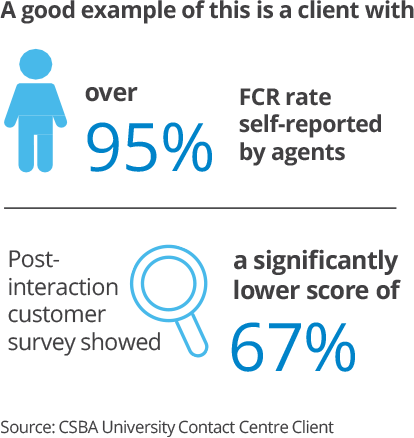

The Case for Rethinking
FCR Measurement
In today’s omnichannel world, the first contact may happen well before the customer ever speaks to an agent. The journey could start on your website, proceed through a chatbot or help article, and culminate in a phone call or online form submission. That’s why FCR needs to be redefined as a holistic customer journey metric – capturing the entire sequence of touchpoints that led to resolution.
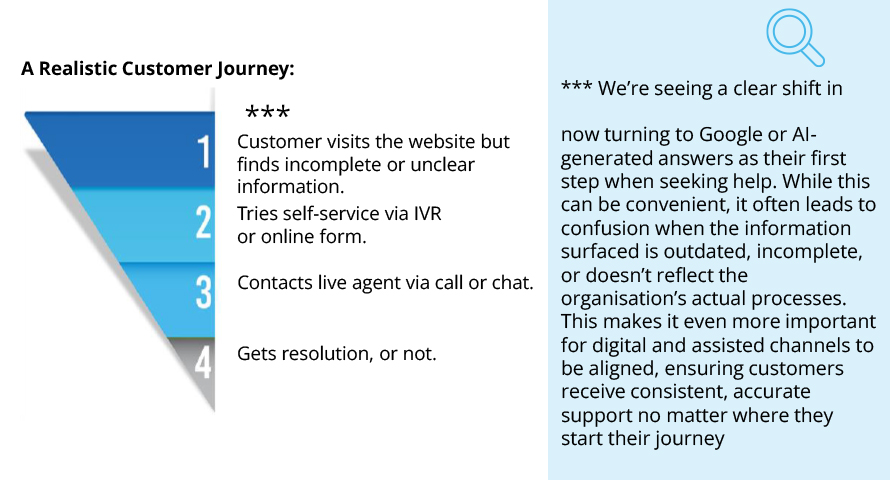
What this tells us is simple: customers are becoming more savvy. They’re not just looking at your organisation’s homepage — they’re searching elsewhere using specific, intent-driven phrases tied to their issue. If the right content doesn’t appear in search results, or if the journey from search to resolution is fragmented, trust erodes before a live agent is ever involved. That’s why it’s no longer enough to solely optimise your service channels.
Your Knowledge Management System (KMS), website structure and external search
visibility all play a critical role in the overall
experience.
Ensuring your content is discoverable, accurate and aligned with common enquiries is essential — both for Customer Satisfaction and operational efficiency.


The Right Way to Measure FCR:
A Best Practice Approach
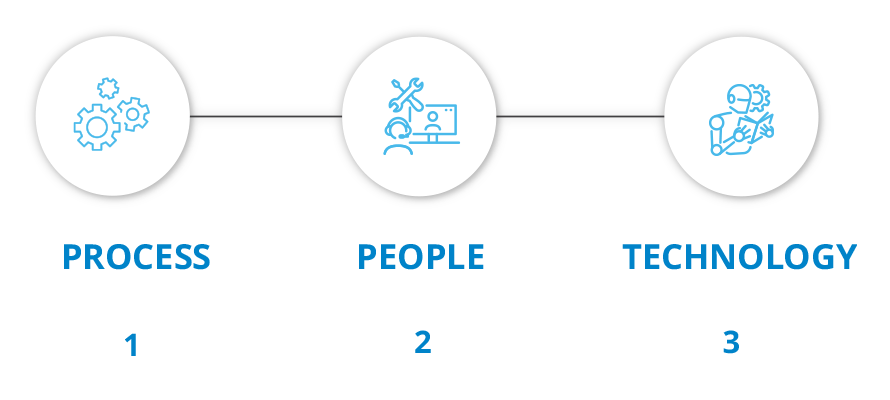
FCR is often regarded as a gold standard in customer service metrics. But to evolve it into a truly customer-centred CX metric, it must be measured it in a way that’s fair, meaningful and actionable. That means thinking beyond numbers, by aligning the Processes, People and Technology involved.

“You can’t improve FCR without fixing the process behind it. A clear definition, consistent wrap codes, and a whole-of-journey view are essential – not only to measure FCR accurately, but to reduce avoidable contacts and truly resolve issues the first time.”
Sudipta Dutt, CX Director, CSBA
| Element | Best Practice Approach |
| Channel-Specific Tracking | Map and measure FCR across every channel (web, IVR, chat, email, call) |
| Delayed Customer Feedback | Survey customers 5–7 days after resolution to capture follow-up attempts |
| Resolution Attribution | Ask customers whether their issue was resolved and through which channel |
| Contact History Linkage | Link repeat contacts to original issue, not just total call volumes |
| Root Cause Analysis | Categorise unresolved issues to identify systemic problems or training gaps |
| FCR Definition & Consistency | Define what counts as FCR clearly and stay consistent across measurement |
| Resolution Integrity Check | Go beyond reopen rates – analyse survey feedback, wrap code recurrence and repeat tickets to validate resolution quality |

| Element | Best Practice Approach |
| Behavioural Quality Assurance | Use frameworks like CSBA’s SenseCX to evaluate and coach agents on the best practice behaviours that drive effective first contact resolution |
| Comprehensive Training | Equip agents with wide-ranging knowledge and provide ongoing support |
| Customer Communication & Experience | Prioritise clear explanations, active listening and customer understanding to avoid miscommunication or follow-up calls |
| Empathy and Active Listening | Train agents on empathetic listening and summarising to avoid callbacks |
| Proactive Problem Solving | Encourage anticipation of customer needs and offer complete resolutions |
| Agent Empowerment | Enable agents to resolve queries without escalation, within guidelines |

| Element | Best Practice Approach |
| AI Agent Assists | Use AI to identify contextual prompts, relevant articles and similar past cases in real time, to aid agents during live interactions |
| Skill-Based & Intelligent Routing | Connect customers with agents of best-fit agent based on the enquiry type and specific agent skills, to minimise handoffs and delays |
| Conversation Analytics & Wrap Code Evolution | Leverage analytics and AI to refine wrap code categories, detect emerging themes and enhance both reporting accuracy and coaching |
| Unified CX Platforms | Invest in systems that integrate interaction history across channels, enabling agents to see the full journey (e.g. chat to phone) |
| Customer Identity Matching | Use phone number analysis or CRM integration to detect frequent contacts or unresolved journeys, flagging cases needing further attention |
Why Getting FCR Right Matters — And How CSBA Can Help
CSBA has been working across sectors, including Local Government, Utilities and Finance Services, to help organisations measure and improve First-Contact Resolution (FCR) effectively. Through this work we’ve seen a consistent and compelling relationship between FCR and two key metrics: Customer Satisfaction (CSAT) and Customer Effort, i.e. the Ease of Experience.
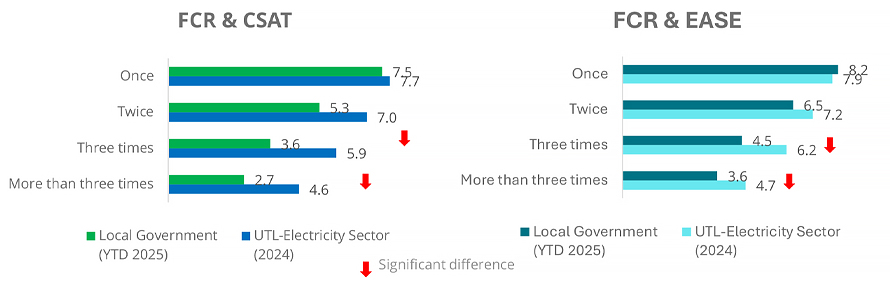
Our most recent benchmarking clearly highlights this. Both CSAT (Customer Satisfaction) and EASE (Customer Effort) decreased significantly in Local Government and Utilities when customers had to call three times or more.
FCR & Customer Satisfaction (CSAT)
When an issue is resolved on the first contact, CSAT scores are high (7.5 in Local Government, 7.7 in Utilities). However, CSAT drops sharply with every additional contact, down to 2.7 in Local Government when a customer has to contact more than three times. Even in the electricity sector, where FCR processes are more mature, CSAT still falls to 4.6 when resolution takes more than three contacts.
FCR & Ease
The pattern is similar for Ease. When customers had their issue resolved in one contact, they rated the experience 8.2 (Local Government) and 7.9 (Utilities). When resolution required multiple contacts, Ease scores dropped to 3.6 in Local Government and 4.7 in Utilities after more than three contacts.
Key Insight: Simpler Queries First
It’s important to acknowledge that complexity plays a role in FCR. Not all queries can (or should) be resolved on the first attempt — especially when they involve multiple teams, legacy systems, or regulatory constraints. That’s why we recommend a tiered FCR strategy:
Prioritise FCR for simple, repeatable interactions (e.g., account queries, service requests). Design pathways for complex queries, ensuring customers are kept informed and supported through the resolution process.

With years of hands-on experience and sector-wide insight, CSBA has developed a best practice FCR measurement and improvement framework. We help organisations:
- Define and measure FCR accurately across all channels
- Diagnose breakdown points in processes and hand-offs
- Design solutions that reduce effort and improve FCR
- Track progress and embed FCR as a key operational metric.
“First Contact Resolution is a critical driver of customer experience. When it’s measured clearly and accurately, it becomes a powerful tool for improvement.
Focusing on getting it right helps reduce effort, build trust, and lift satisfaction — all from one interaction.”
Paul van Veenendaal, Managing Director, CSBA
Ready to Improve FCR and Boost Customer Experience?
If improving CSAT and Ease are on your agenda, FCR is the place to start.
CSBA can help ensure you measure it effectively and efficiently — and improve it where it counts.
Let’s chat about a tailored FCR program for your organisation.


Melbourne VIC